Double Unders: How to Finally Get the Jump Rope Move That Trips Everyone Up
Quick Answer: A double under is two rope passes per jump, and it’s a timing skill rather than a speed contest. The progression that works: solid single unders first, then power jumps (higher singles), then one double under from a dead stop, then single-double-single rhythm drills, then consecutive reps. Faster wrists and a slightly higher jump — not faster arms.
You’ve seen it. Someone across the gym rips off forty double unders like it’s nothing, and you can’t string two together without the rope taking a chunk out of your calf.
Here’s the part nobody says out loud: they whipped themselves too. Repeatedly. Double unders are a learnable technical skill with a boringly reliable progression, and this is it.
What Is a Double Under, Exactly?
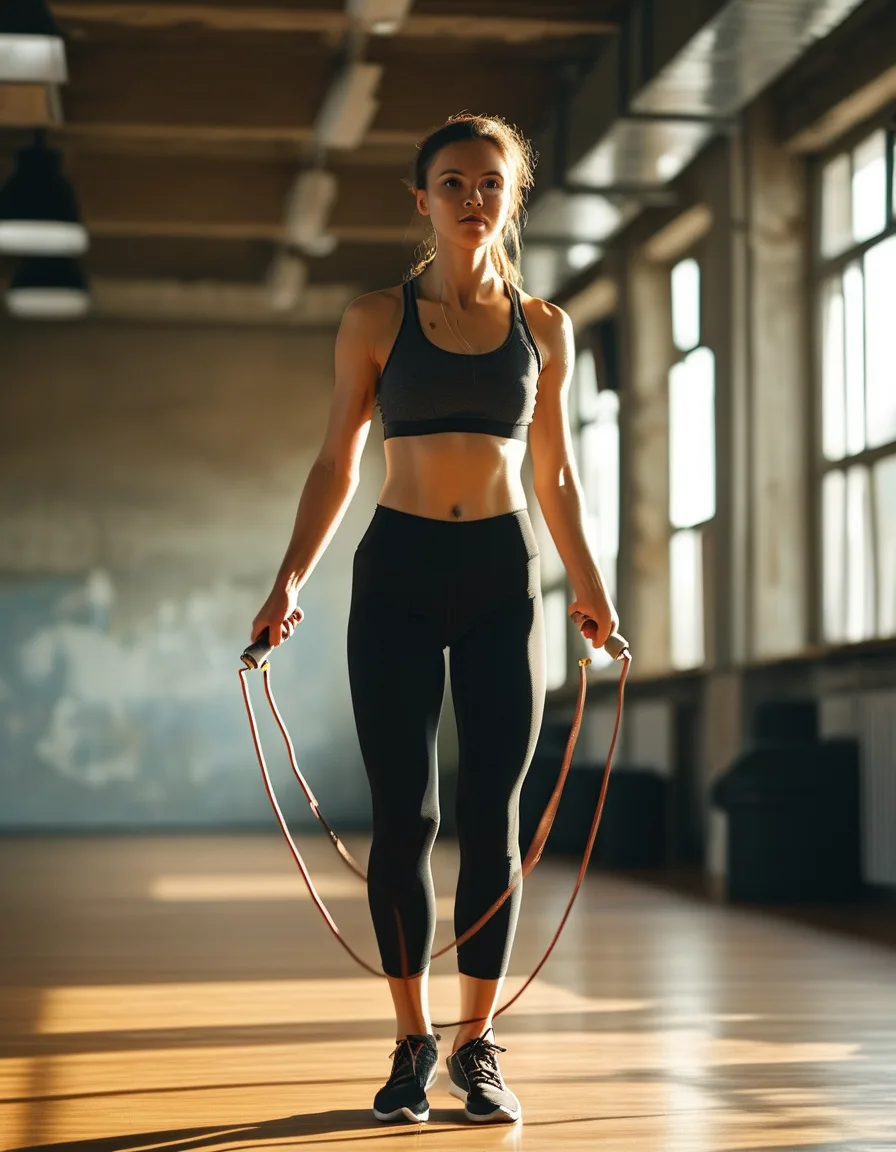
The rope passes under your feet twice during a single jump. That’s it. One jump, two rotations.
Which means the whole problem is fitting two rope passes into the air time of one jump. You solve it two ways: buy more air time (a slightly higher jump) and spin the rope faster (wrists, not arms). Get both right and it clicks. Get one right and you’ll clip your feet every time.
Why Do Double Unders Trip Everyone Up?
Because the natural instinct is wrong in three specific ways.
Instinct one: jump way higher. People launch into a tuck jump, which throws off the rhythm and gasses them out in ten reps. You need maybe 2–4 inches more height than your single under, not a vertical leap test.
Instinct two: swing harder with the arms. Big arm circles feel powerful and are actually slower. Rope speed comes from the wrists — elbows stay tucked near the ribs, forearms roughly parallel to the floor, and the rope gets whipped around by a fast flick.
Instinct three: rush. Tension slows your wrists. The people who look effortless are, genuinely, relaxed.
What’s the Step-by-Step Progression?
Step 1 — Own your single unders. You want 50–100 unbroken singles with a relaxed, consistent rhythm before touching doubles. If your singles are erratic, doubles are impossible. This step is not optional and it’s where most people cheat.
Step 2 — Power jumps. Do 20 single unders with a deliberately higher jump — same rope speed, more air. This teaches your body the jump height without adding rope complexity. Do 3 sets of 20.
Step 3 — One double, from a dead stop. Stand still, jump high, flick the wrists fast, land. Just one. Reset. Do this 20–30 times per session. Landing one repeatedly is a real milestone.
Step 4 — Single-double-single. Single under, then a double, then a single, then a double. This is the drill that builds the rhythm, because it forces you to recover the timing between doubles instead of collapsing into a panicked scramble.
Step 5 — Consecutive. Two in a row. Then three. Then five. Ten unbroken is when it starts feeling like a real skill rather than a fluke.
Does Your Rope Actually Matter?
More than you’d like. A too-light rope loses tension mid-rotation and a too-long rope drags on the ground.
- Length: stand on the middle of the rope; the handles should reach roughly your armpits. Many people learning doubles go slightly shorter than that once they’re comfortable — a shorter rope moves faster.
- Type: a coated steel cable is the standard choice for doubles. It’s heavy enough to feel where the rope is, fast enough to complete two passes.
- Surface: a sprung wood floor or rubber gym mat. Concrete is hard on your shins and chews through cables. Thick carpet steals your rebound.
- Shoes: something with a bit of forefoot cushioning. You’re landing on the balls of your feet for hundreds of reps.
5 Mistakes Everyone Makes
- Skipping straight to doubles from shaky singles. You’re trying to build a second floor on a foundation that isn’t set.
- Tuck-jumping. Knees to chest feels like it buys time. It buys exhaustion and a broken rhythm.
- Arms flying out to the sides. Every inch your hands drift from your body shortens the effective rope. Elbows in.
- Practising to failure. Twenty-rep attempts while gassed just drills bad mechanics. Practise doubles fresh, at the start of a session, in short sets.
- Quitting at week two. The honest timeline is 2–6 weeks of consistent 10-minute practice for most adults. The whip marks fade. The skill doesn’t.
How Do You Program Double Unders Once You Have Them?
Start using them where they shine — short, sharp conditioning intervals. 30 seconds of doubles, 30 seconds rest, 8 rounds is a brutal and efficient finisher. Or fold them into a circuit: 20 doubles between strength sets.
A useful benchmark: unbroken sets of 20–30 means you can use them in a workout. Below that, keep them as skill practice at the start of a session so fatigue doesn’t wreck your form.
FAQ
How long does it take to learn double unders?
With 10 minutes of focused practice 3–4 times a week, most people land their first one within a week or two and string together 10+ within 4–6 weeks. Existing single-under skill is the biggest variable.
Why do I keep hitting the front of my feet?
Usually the rope is passing too slowly on the second rotation, so it catches on your descent. Faster wrists, or slightly more jump height. If it’s hitting your heels instead, your hands have drifted too far forward.
Should I jump higher or spin faster?
Spin faster first. Extra height costs energy and is the more common overcorrection. Add just enough height to buy the time your wrists need.
Do the whip marks ever stop?
They mostly do, once your timing settles. Long socks or leggings during the learning phase are a legitimate strategy, not a cop-out.
TL;DR:
- A double under = two rope passes per jump; it’s timing, not raw speed.
- Lock in 50–100 unbroken single unders before you start.
- Progression: power jumps → one double from a dead stop → single-double-single → consecutive.
- Jump 2–4 inches higher, spin from the wrists, keep elbows tucked near the ribs.
- Use a coated steel cable on a forgiving surface; handles to armpit height.
- Practise fresh in short sets, never to failure.
- Expect 2–6 weeks and a few whip marks. Everyone gets them.
Keep Reading
This article is for general informational and styling purposes only. Fit, sizing, and product availability may vary.