Why Jump Rope Hurts Your Knees (It's Usually Not the Rope's Fault)
Quick Answer: Jump rope knee pain is most often caused by landing flat-footed or with locked knees on a hard surface, not the exercise itself. Land softly on the balls of your feet with slightly bent knees, and jump on a mat or grass instead of concrete when possible.
You start jump rope for a quick, effective cardio session, and within a week your knees are aching. That’s a real and common pattern — and almost always a fixable technique or surface issue, not a sign jump rope is wrong for your body.

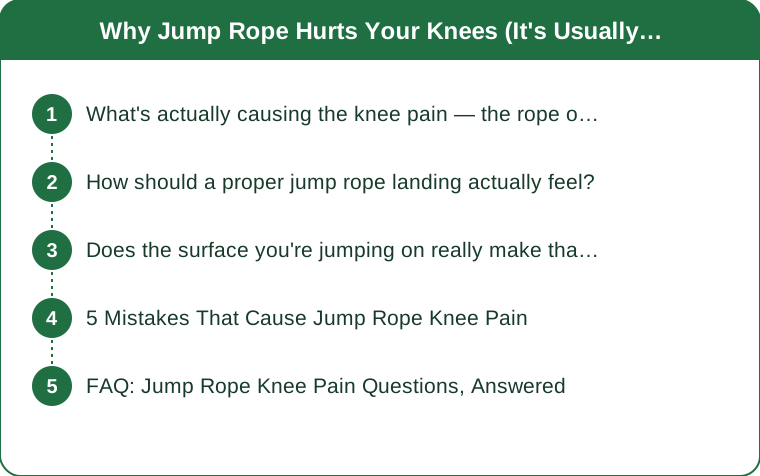
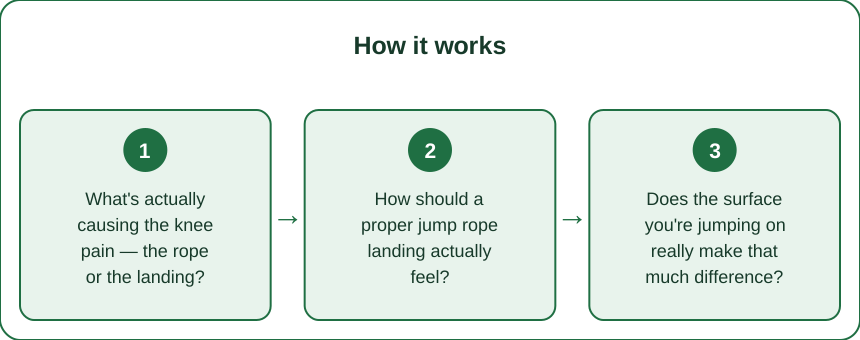
What’s actually causing the knee pain — the rope or the landing?
In the vast majority of cases, it’s landing mechanics, not the rope itself. Landing flat-footed transmits impact force straight up through the knee joint with almost no shock absorption. Landing with knees fully locked straight does the same thing — the joint takes the full impact instead of your calf and ankle muscles absorbing it first.
How should a proper jump rope landing actually feel?
Soft and low — you should barely hear your feet touch the ground. Land on the balls of your feet, never the heel, with knees slightly bent, absorbing the impact through your calves and ankles the same way a light hop naturally would.
Jump height matters too: you only need to clear the rope by an inch or two. Big, high jumps multiply impact force with every single rep, hundreds of times per session.

Does the surface you’re jumping on really make that much difference?
Yes, significantly. Concrete and hard tile offer zero shock absorption, meaning your joints do 100% of the impact-cushioning work. A rubber gym mat, sprung wood floor, or grass absorbs a meaningful portion of that impact before it ever reaches your knees.
If you don’t have access to a softer surface, even a basic exercise mat placed under your jump area measurably reduces cumulative joint stress over a session.
5 Mistakes That Cause Jump Rope Knee Pain
1. Jumping too high on every rep. Clear the rope by an inch, not six inches.
2. Wearing worn-out or non-cushioned shoes. Running or cross-training shoes with real midsole cushioning matter more here than people expect.
3. Going straight into a long session without a warm-up. Cold connective tissue absorbs impact worse than warmed-up tissue.
4. Ignoring early twinges and pushing through a full session anyway. Early mild discomfort is the signal to fix form, not power through.
5. Doing too much too soon. Jumping rope daily for 20+ minutes in week one, with no base fitness, overloads the joint before technique has had time to become automatic.
FAQ: Jump Rope Knee Pain Questions, Answered
Is jump rope safe for people with pre-existing knee issues?
It depends on the specific issue — for many mild cases, proper low-impact technique on a soft surface is fine, but check with a physical therapist or doctor first if you have a diagnosed knee condition, rather than guessing.
How long should a beginner jump rope session be?
Start with 5-10 minutes total, broken into shorter intervals, rather than one continuous stretch — this lets you monitor form and fatigue rather than pushing through declining technique.
Does shoe type really matter that much for jump rope?
Yes — cross-training or running shoes with cushioned midsoles noticeably reduce impact compared to flat-soled shoes or going barefoot on a hard surface.
TL;DR:
- Knee pain from jump rope is usually a landing-technique or surface issue, not the exercise’s fault
- Land softly on the balls of your feet with slightly bent knees, jumping just an inch or two high
- Jump on a mat, sprung floor, or grass instead of concrete when possible
- Start with short 5-10 minute sessions and build up as technique becomes automatic
Before your next session, film 10 seconds of your jumps from the side — most people spot the flat-footed landing the moment they see it. This is general information, not medical advice.
Keep Reading
This article is for general informational and styling purposes only. Fit, sizing, and product availability may vary.