Why Jump Rope Gives You Shin Splints (and How to Actually Prevent It)
Quick Answer: Jump rope shin splints usually come from jumping too high, landing flat-footed, or skipping on hard concrete without enough calf/ankle strength built up. Lowering your jump height, landing on the balls of your feet, and building volume gradually fixes most cases.
You started jump rope for the cardio, felt great the first two sessions, and now your shins ache just walking up stairs. That progression is extremely common — and almost always traceable to one of a few specific habits.
What’s actually causing the shin pain?
Repetitive impact stress on the tibia from landing incorrectly, faster than your shin muscles can adapt. Two habits cause most of it: jumping too high (more impact force on landing) and landing flat-footed instead of on the balls of your feet (skipping the ankle’s natural shock absorption).
Beginners also tend to ramp up volume too fast — going from zero to 15 minutes daily in the first week doesn’t give the tibialis anterior muscle time to adapt, which is exactly the muscle that gets inflamed in shin splints.
How do you fix your jump technique to prevent this?
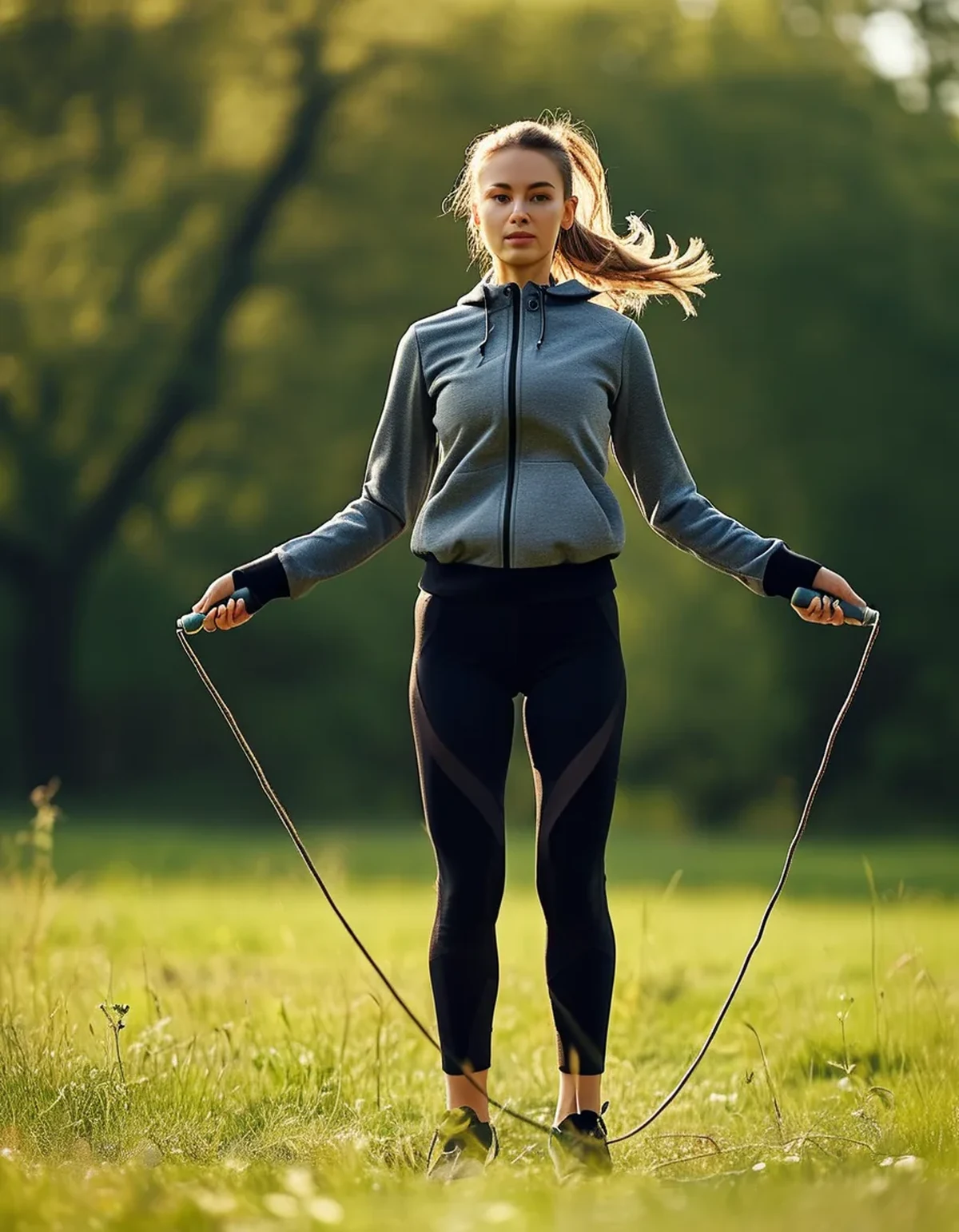
Jump only 1-2 inches off the ground — just enough to clear the rope, not a full hop. Most beginners jump 4-6 inches higher than necessary, which multiplies landing force with each rep.
Land on the balls of your feet, heels barely grazing down, never landing flat. This lets your calf and ankle absorb impact the way they’re designed to, instead of sending shock straight up your shin bone. Practice this in front of a mirror at slow speed before adding speed back in.

Does the surface you jump on actually matter?
Significantly. Concrete and hard tile offer zero shock absorption, so every landing force goes straight into your shins. A sprung wood floor, rubber gym mat, or grass reduces impact substantially compared to concrete — this alone can be the difference between pain-free sessions and chronic soreness for some people.
If concrete is your only option, a thin exercise mat (not a thick cushioned one, which affects footing) under your jump area meaningfully reduces impact without compromising your landing stability.
How should you actually build up jump rope volume?
Start with 3 sessions a week, 5-10 minutes each, with rest days between — don’t jump daily in week one no matter how easy it feels early on, since shin splints often show up 5-7 days into overuse, not immediately. Increase total weekly time by no more than 10-15% each week.
If you feel early shin tenderness (not full pain, just awareness), that’s the signal to hold volume steady for a week, not push through it. Pushing through early tenderness is what turns it into a multi-week injury.
FAQ: Jump Rope Shin Splint Questions, Answered
Should I stop jumping rope entirely if my shins hurt?
If it’s sharp or persistent pain, yes, rest and see a professional. Mild post-workout tenderness that fades within a day can mean just reducing volume and fixing landing technique, not full stoppage. This is general information, not medical advice.
Do supportive shoes actually help?
Yes — cross-training shoes with cushioned midsoles absorb more shock than running shoes or bare feet, which matters a lot for high-repetition, high-impact activities like jump rope.
How long does it take to recover from jump rope shin splints?
Mild cases often improve in 1-2 weeks of reduced-impact activity; more persistent cases can take 4-6 weeks. Rushing back at full volume is the most common reason it recurs.
TL;DR:
- Shin splints usually come from jumping too high, landing flat-footed, or ramping volume too fast
- Jump only 1-2 inches, land on the balls of your feet
- Surface matters — concrete transmits far more shock than wood, mats, or grass
- Increase weekly volume by no more than 10-15%, and rest at the first sign of tenderness
Jump rope shin splints are almost always a fixable technique issue, not a sign you should give up the workout entirely.
Keep Reading
This article is for general informational and styling purposes only. Fit, sizing, and product availability may vary.