Jump Rope Shin Pain: Why Week 2 Hurts and the Volume Fix That Prevents It
Quick Answer: Week-2 shin pain is a volume error, not a form flaw: bone and tendon adapt slower than lungs and enthusiasm, and daily 20-minute sessions from day one overload tissue that wanted weeks of gradual loading. Prevention: start at 5 minutes every other day (yes, really), jump low (1-2cm clearance) on a forgiving surface in cushioned shoes, and progress ~10-15% weekly. Already hurting? 5-7 days off impact, then restart at half volume. Pain that’s pinpoint-specific, worsening, or present at rest deserves professional eyes. This is general information, not medical advice.
The jump rope arc is famous: day 1 enthusiasm, week 1 daily sessions and cardio pride, week 2 aching shins, week 3 a rope in a drawer. The rope gets blamed as ‘bad for your legs’ — but the culprit was the schedule, and the fix costs nothing but patience.
Why do shins fail in week 2 specifically?
The adaptation mismatch: your cardiovascular system improves within days and your motivation is instant — but bone remodels on a weeks-long timeline, and the shin’s tibia plus the muscles wrapping it are absorbing hundreds of small impacts per minute of rope work.
The loading math nobody does: even relaxed rope skipping runs 100-140 jumps per minute — a 15-minute session is roughly 2,000 impacts. Daily from a standing start, that’s 14,000 weekly impacts through unadapted tissue — exactly the overuse arithmetic that plyometric programming caps with contact budgets, applied uncapped because ‘it’s just jump rope.’
Week 2 is when the accounts reconcile: microdamage accumulation (normal, adaptive at the right dose) outpaces remodeling (the actual adaptation), and the shin’s periosteum and stabilizing muscles file their complaint. The frustrating irony: the pain arrives precisely when cardio feels great — the engine upgraded in days while the chassis was still in the shop.
What’s the progression that prevents it?
The volume on-ramp:
- Weeks 1-2: 5 minutes, every other day — structured as 30-60 second rope intervals with equal rests (which also matches beginner coordination limits). It will feel absurdly easy aerobically; that’s the point — you’re training bone, and bone doesn’t care about your heart rate.
- Weeks 3-4: 8-10 minutes, every other day; add a third weekly session if pain-free.
- Week 5+: progress total weekly minutes ~10-15% at a time; daily jumping becomes reasonable around week 6-8 for most — with at least one full rest day held permanently.
The impact reducers that multiply the runway:
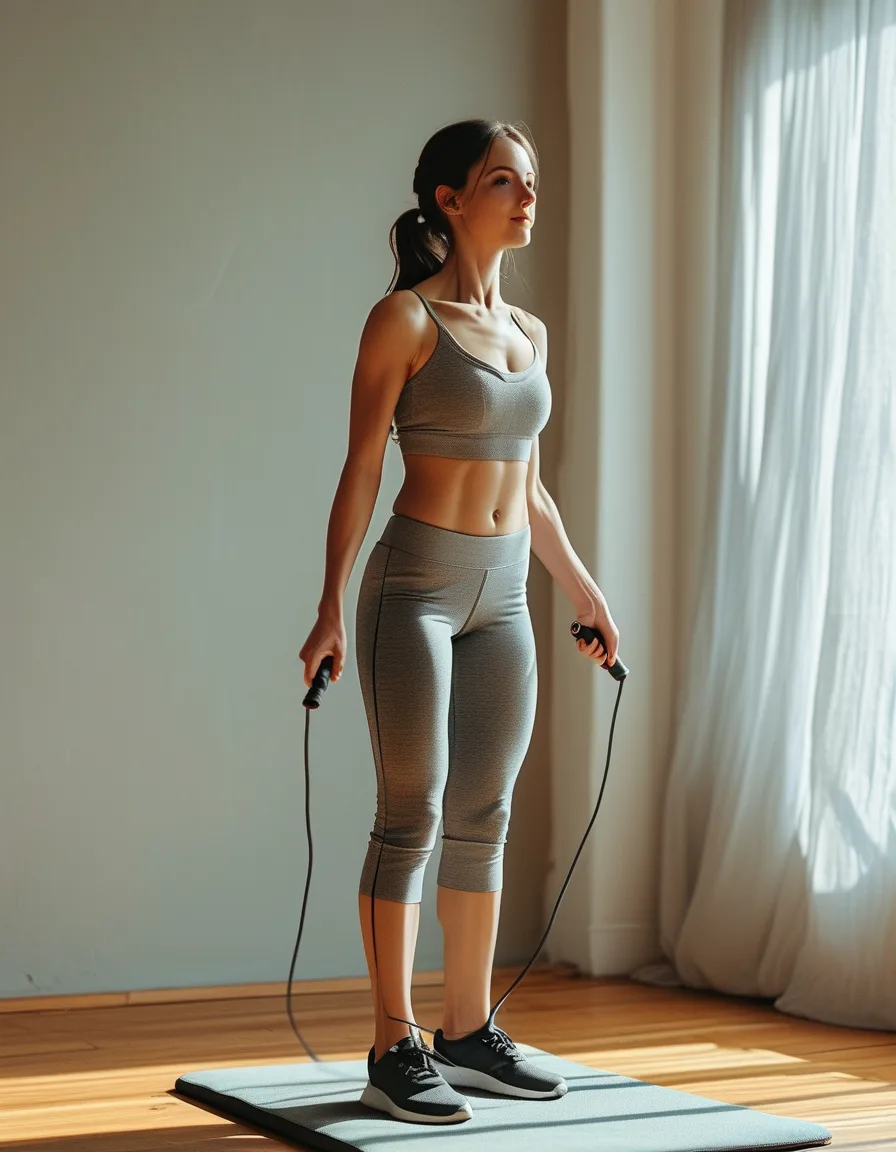
- Jump low: 1-2cm of clearance is all the rope needs — the high bound doubles impact for zero benefit. Quiet landings are the audit: if neighbors can hear you, the tibia can feel you.
- Surface hierarchy: rubber gym flooring / jump mat > wood > turf >> concrete. The mat is the single best $20 in the whole hobby.
- Shoes with forefoot cushioning (rope work lands on the ball of the foot) — worn barefoot-style shoes and dead flats front-load the shins.
- Land soft, knees springy: stiff-legged jumping sends force straight up the chain; a micro-bend at the knee is the shin’s shock absorber.
- Calf capacity work on off days: 3 sets of 15 slow calf raises — the muscles that decelerate each landing are trainable armor.
Myth vs Fact: Jump Rope Shin Edition
Myth: Shin pain means jump rope is bad for your legs. Fact: Properly dosed rope work is a bone-building stimulus — impact at the right volume is what the bone-density literature recommends. The rope wasn’t the problem; fourteen thousand week-one impacts were.
Myth: Push through — shins toughen up. Fact: Half true and dangerous: mild diffuse soreness that eases between sessions is adaptation working; pushing through worsening pain converts manageable irritation toward stress-injury territory, where the timeout is measured in months, not days. The distinction that matters: diffuse-and-easing (adjust volume, continue) versus pinpoint-tender, worsening, or aching at rest (stop, and get it assessed). This is general information, not medical advice.
Myth: Better rope = less shin pain. Fact: Rope upgrades change speed and feel, not impact — the variables that reach your shins are volume, height, surface, shoes, and landing softness. The $60 rope on concrete loses to the $12 rope on a mat every time.
The reframe that saves the hobby: jump rope is a skill sport with an impact budget — treat the first month as coordination practice that happens to include bone loading, and the cardio phase arrives on schedule with shins intact.
FAQ: Jump Rope Shin Questions, Answered
I already have shin pain — how do I come back?
The standard pattern: 5-7 days completely off impact (bike, swim, walk freely), calf raises and ankle mobility meanwhile; return at half your last comfortable volume on the every-other-day schedule, progressing only pain-free weeks. Recurring pain on honest restarts, pinpoint tenderness on the bone, or pain at rest = assessment before more jumping.
Are weighted ropes worse for shins?
Marginally — heavier ropes slow the cadence (fewer impacts per minute, oddly shin-friendlier) but encourage higher jumps in beginners (worse). Net: neutral for most; the volume rules dominate either way. Learn on a basic bead or PVC rope; specialize later.
Can I just jump on carpet at home?
Thick carpet reduces impact but destabilizes landings and eats rope rhythm — a firm jump mat over any floor is the better answer (impact absorption with a predictable surface). Grass is the outdoor equivalent: forgiving but uneven; fine for low-intensity sessions.
TL;DR:
- Week-2 shin pain = bone adapting slower than cardio: ~2,000 impacts per 15 minutes, uncapped from day one
- The on-ramp: 5 minutes every other day, +10-15% weekly, permanent rest day — absurdly easy aerobically by design
- Impact reducers: 1-2cm jumps, mat or rubber floor, cushioned forefoot, springy knees, off-day calf raises
- Diffuse-and-easing soreness = adapt; pinpoint, worsening, or at-rest pain = stop and assess
The rope in the drawer wasn’t defeated by your shins — it was defeated by a schedule your shins never agreed to. This is general information, not medical advice.
Keep Reading
This article is for general informational and styling purposes only. Fit, sizing, and product availability may vary.