Concrete Is a Choice: Surfaces and Shoes for Sustainable Skipping
Quick Answer: Skip on sprung wood, rubber gym tiles or a wooden deck — not daily on concrete, which is where shin splints come from. Wear cross-trainers with forefoot cushioning (running shoes put their padding under the heel, which skipping barely uses). Build volume gradually with 30 seconds on / 30 seconds off intervals, and treat lingering shin tenderness as a signal to back off, not tough out.
Jump rope has a reputation as low-impact cardio, and that reputation is conditional. It’s true on the right surface in the right shoes.
On a concrete driveway in worn-out running shoes, doing twenty minutes straight because the app said so, it’s how enthusiastic beginners meet shin splints — and shin splints turn a two-day adjustment into a six-week sentence.
Here’s the sustainable setup, ground up.

What’s the Best Surface to Jump Rope On?
Ranked, best to worst:
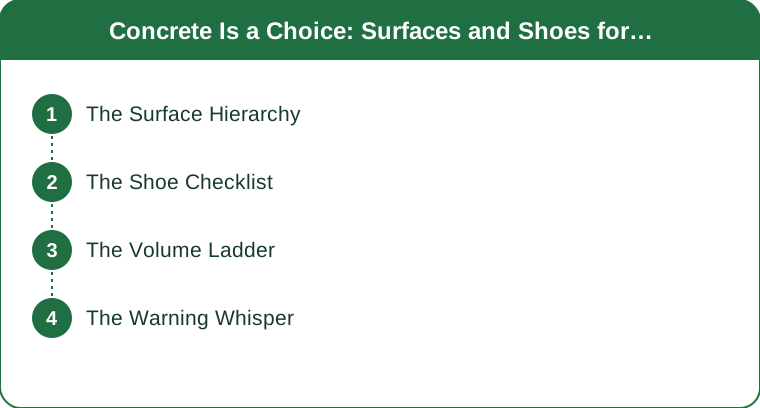
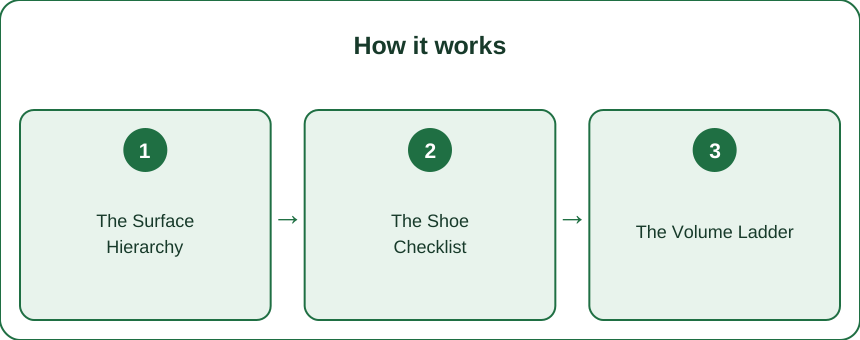
1. Sprung gym floors and rubber gym tiles. The gold standard. Enough give to absorb impact, enough firmness to return energy. If you have gym access, this is the answer.
2. Wooden decks and hardwood over joists. Nature’s spring. A deck flexes usefully, and the rope’s wear on it is minimal.
3. Packed dirt, grass and rubberised running tracks. Softer than pavement, though uneven ground makes rope timing harder and grass eats rope speed.
4. Asphalt. Harder, and rougher on the rope’s cable. Acceptable occasionally.
5. Concrete. The shin tax. Fine occasionally; a daily concrete habit is the most common route to shin splints in new skippers. It also destroys ropes faster than any other surface.
The $25 fix: interlocking rubber gym tiles. A 4×4 foot square is enough for basic skipping and turns any garage, patio or concrete basement into tier-one surface. It’s the single best purchase in this entire article, and it costs less than one physio appointment.
A travel alternative: a folded yoga mat is better than bare concrete, though it’s soft enough to feel slightly unstable for fast work.
What Shoes Should You Wear for Jump Rope?
The key insight: skipping lands on the ball of the foot. Your heel barely touches down. Which means running shoes — engineered to cushion a heel strike — put their padding in the wrong place entirely.
What jump rope shoes need:
- Forefoot cushioning. The padding should be where you actually land.
- Lateral stability. Once you progress to side swings, criss-cross and skier jumps, you’re moving sideways, and a shoe built purely for forward motion won’t support it.
- A low-ish stack height. Tall, soft midsoles wobble under repeated forefoot landings. You want ground feel.
- A secure midfoot. Your foot shouldn’t slide forward on every landing.
Cross-trainers dominate the category for exactly these reasons. Court shoes (tennis, volleyball, indoor) are a strong second — they’re built for forefoot landings and lateral movement.
What disqualifies a shoe regardless of pedigree: being worn out. Midsole foam compresses and stops rebounding long before the upper looks tired. If you’ve had them a year of regular use, they’re not cushioning much.
Barefoot skipping is a real practice among experienced skippers with strong feet and calves, on a forgiving surface only. It is not a beginner starting point.

How Do You Build Volume Without Getting Shin Splints?
Impact tolerance builds in tendon and bone, and those adapt on a slower schedule than your cardio fitness does. That mismatch — feeling fit enough to do more than your shins are ready for — is what causes most jump rope injuries.
The interval ladder:
- Weeks 1–2: 30 seconds skipping / 30 seconds rest, 6–8 rounds, 3 days a week with a day between.
- Weeks 3–4: 45 on / 30 off, 8 rounds.
- Weeks 5–6: 60 on / 30 off, 8–10 rounds.
- After that: extend continuous blocks gradually, or add tricks rather than volume.
The 30/30 protocol isn’t a beginner’s limitation — it is the shin-protection plan. Continuous skipping arrives gradually or it arrives with an injury.
The insurance premium: calf raises with slow negatives, 3 sets of 12–15, twice a week. Lower over a count of three. Strong, resilient calves are the best protection against the whole shin-splint category, and this takes four minutes.
Also worth doing: land quietly (noise is uncontrolled impact), keep jumps low — an inch is enough — and stay on the balls of your feet without slamming the heels down.
5 Mistakes Everyone Makes Starting Jump Rope
- Jumping too high. An inch clears the rope. Six inches multiplies impact and exhausts you by minute two.
- Going straight to continuous skipping. Cardio fitness outpaces tendon adaptation. Intervals aren’t training wheels; they’re the plan.
- Using old running shoes. Wrong cushioning location, and usually compressed anyway. The third mistake is the one people defend hardest.
- Skipping daily from the start. Leave a day between sessions for the first few weeks. Tendons adapt on their own calendar and don’t negotiate.
- Ignoring the whisper. Shin tenderness that’s still there the next day is the volume-or-surface memo. Answer it with softer ground and a rung down the ladder — not with toughness. This is the mistake that costs six weeks.
When to see a professional: shin pain that’s sharp, localised to a specific point, or worsening despite rest needs medical assessment — stress fractures present this way and training through one is genuinely serious. Persistent shin pain that doesn’t settle within a couple of weeks of reduced load also warrants a physio.
Can you jump rope on concrete?
Occasionally, yes. Daily, no — concrete is where shin splints come from in new skippers, and it wears ropes out fast. A $25 set of interlocking rubber tiles solves it permanently and turns any concrete space into a good surface.
What shoes are best for jumping rope?
Cross-trainers or court shoes with forefoot cushioning, lateral stability and a low-ish stack height. Avoid running shoes, which concentrate cushioning under the heel — a part of your foot skipping barely uses.
How do I avoid shin splints from jump rope?
Skip on a forgiving surface, wear forefoot-cushioned shoes, build with 30-seconds-on/30-off intervals rather than continuous work, do calf raises twice a week, jump low and land quietly. And back off at the first sign of tenderness that lingers past a day.
TL;DR:
- Surface hierarchy: sprung floors and rubber tiles > wooden decks > dirt/track > asphalt > concrete.
- $25 of interlocking rubber tiles upgrades any garage to tier one.
- Wear cross-trainers with forefoot cushioning — running shoes pad the wrong end.
- Build with 30 on / 30 off intervals; continuous skipping arrives gradually.
- Calf raises with slow negatives, 3×12–15 twice a week, are cheap insurance.
- Jump an inch, land quietly, and treat lingering shin tenderness as a memo — not a challenge.
Keep Reading
This article is for general informational and styling purposes only. Fit, sizing, and product availability may vary.