Why You Can Skip for Three Minutes in Class and Forty Seconds Alone
Quick Answer: In class you have external pacing — music with a fixed beat, an instructor’s count and other people’s rhythm — which regulates your tempo without conscious effort. Alone, you set your own pace, and almost everyone starts too fast, spikes their heart rate, and fails within a minute. Use music at a fixed tempo (around 120 to 140 BPM), count your jumps in sets, and start at a rate that feels too easy for the first thirty seconds.
Three minutes unbroken in class, no problem.
Forty seconds at home and you are stopping to catch your breath.
The difference is not fitness. It is tempo control.
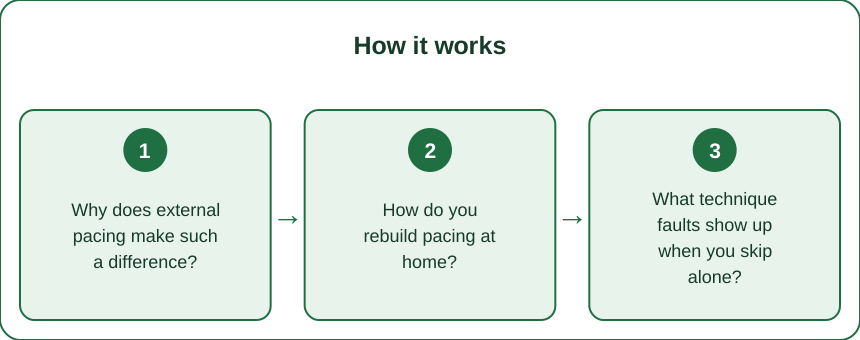
Why does external pacing make such a difference?
Five effects, all of them removed when you skip alone.
Music imposes a fixed rate. A steady beat prevents the gradual acceleration that everyone does unconsciously when unpaced.
Skipping too fast burns out fast. Rope speed determines jump height, ground contact and effort. Even a small increase in rate compounds quickly, which is why the first thirty seconds decide the whole set.
Others’ rhythm regulates yours. Peripheral awareness of surrounding tempo synchronises you without any conscious effort — this is well documented in group exercise generally.
An instructor’s count provides an endpoint. Knowing a set ends at thirty allows you to distribute effort. An open-ended set has no distribution strategy.
Effort perception drops in groups. The same physical work is consistently rated as easier when done with other people.
And there is no restart cost in class. Miss a jump in class and you rejoin the group tempo instantly. Miss alone and you restart at whatever speed feels right, which is usually too fast.
How do you rebuild pacing at home?
Five concrete substitutes.
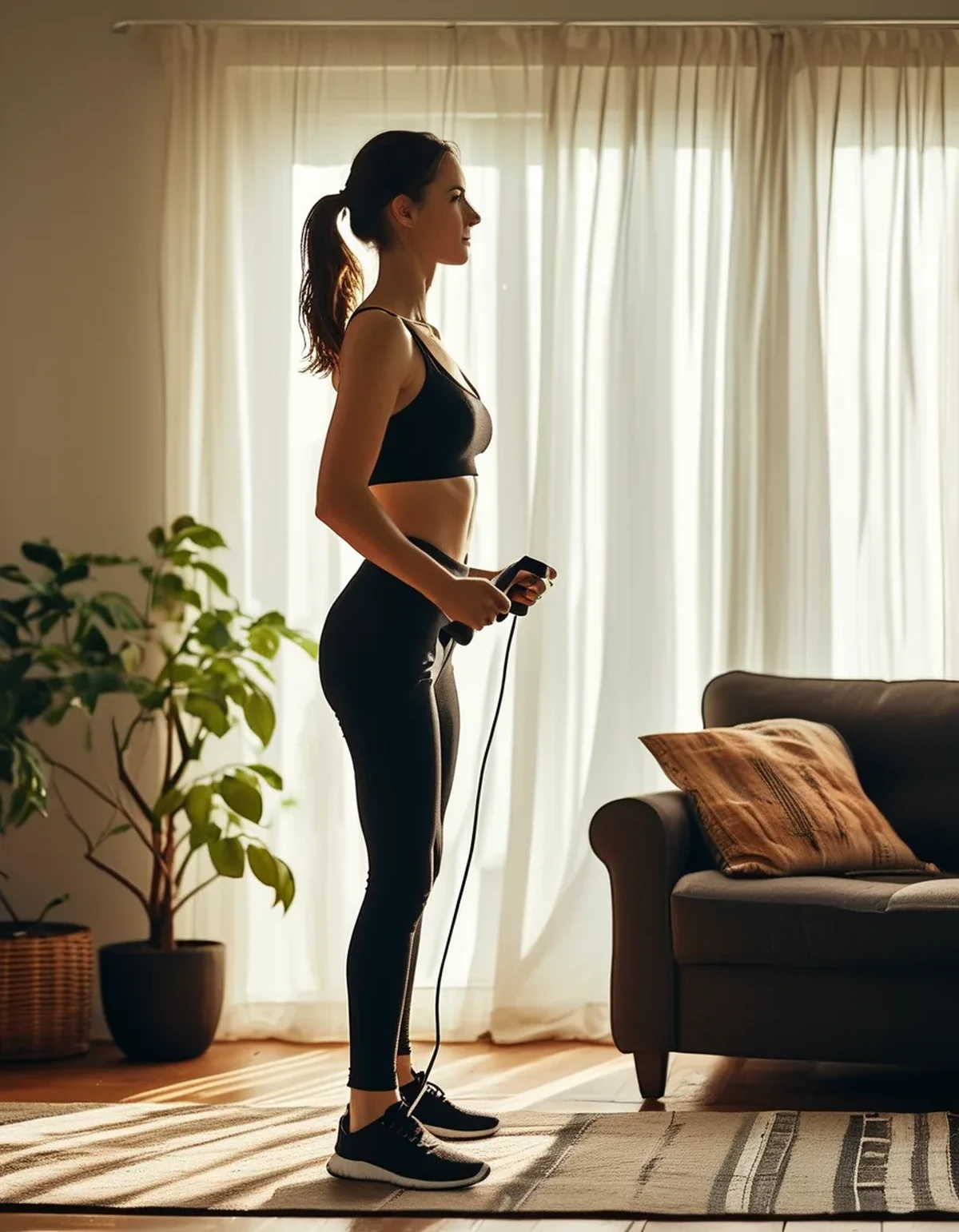
Use music at a fixed tempo. 120 to 140 BPM is a comfortable single-under range for most people. One jump per beat. This alone closes most of the gap.
Count in sets, not in minutes. ‘3 sets of 40 jumps’ gives you an endpoint and a distribution strategy. ‘Skip for three minutes’ does not.
Start deliberately too slow. The first thirty seconds should feel easy. If it does not, you are already ahead of the pace you can sustain.
Use a timer with intervals, not a stopwatch. 30 seconds on, 30 off for 8 rounds accumulates four minutes of skipping with none of the pacing pressure.
Film yourself once. Almost everyone is shocked at how high they jump and how fast they turn the rope alone. Both are lower in class, and both are why class feels easier.
Practical target: jump only 2 to 3cm off the floor. Excess height is the single biggest cause of early fatigue and it increases when you are unpaced.
What technique faults show up when you skip alone?
Four, all of which class rhythm suppresses.
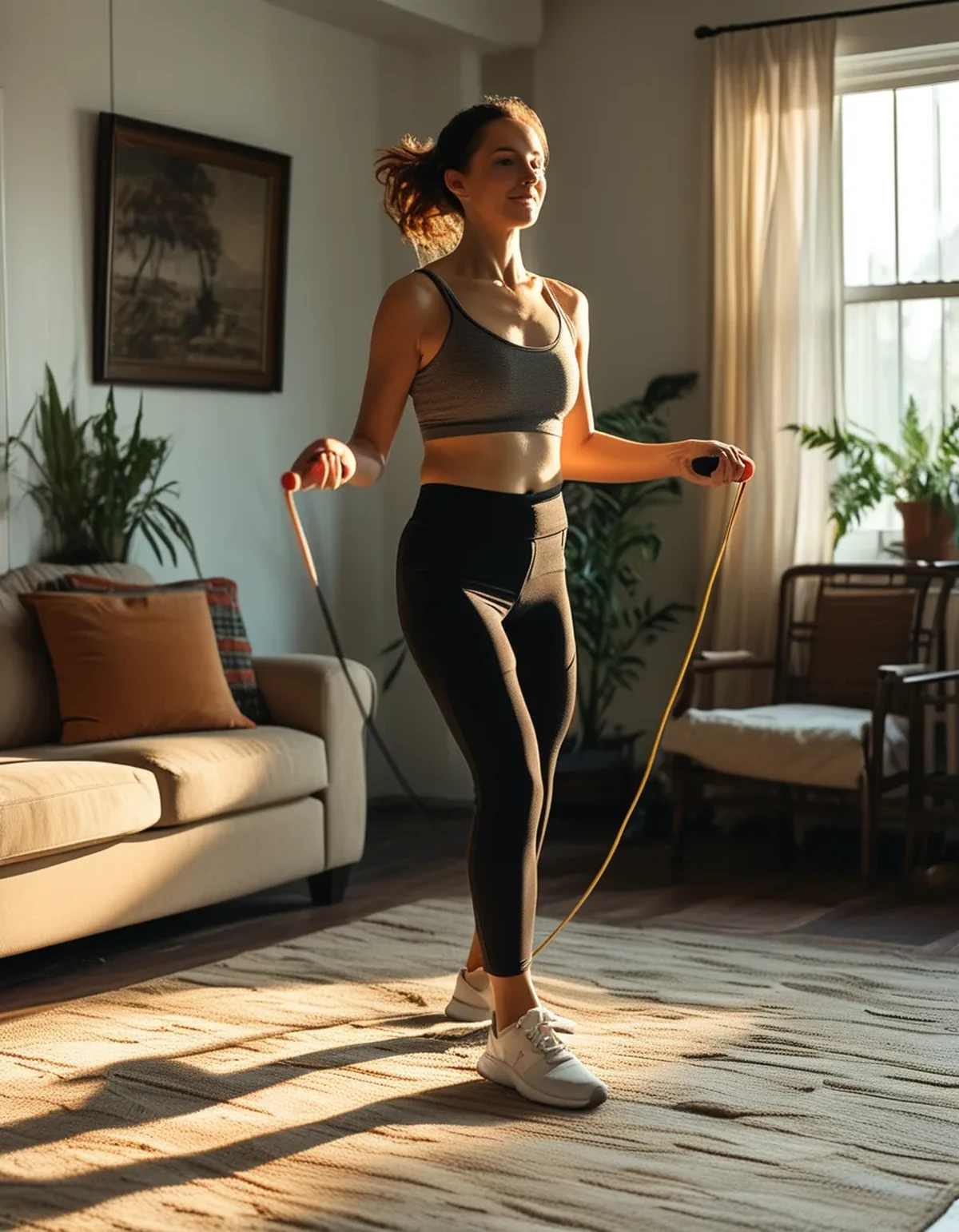
Jumping too high. Unpaced skipping produces bigger jumps, which raises heart rate and fatigues calves rapidly.
Turning from the shoulders. The rope should be turned with the wrists, elbows close to the body. Shoulder rotation is exhausting and slow, and it appears the moment you stop matching a beat.
Landing heavily. Fatigue and speed both increase impact. Landing quietly is a good proxy for landing well.
Rope length drift. A rope slightly too long forces a higher jump. Stand on the middle of the rope; the handles should reach roughly armpit height.
Breathing falls out of rhythm. In class you naturally breathe to the music. Alone, people hold their breath and fatigue within seconds. Breathe on a fixed count.
Seasonal note: moving sessions indoors as the weather turns often makes this worse. A lower ceiling encourages a flatter jump, which is good, but a hard indoor floor increases impact and a smaller space makes people rush. If your skipping got harder when you moved inside, check jump height and surface first.
This is general information, not medical advice.
5 Mistakes That Kill Solo Skipping
Starting at your class pace immediately. The first thirty seconds in class are actually slower than you remember. Start deliberately easy.
Skipping without music. The single most effective fix, and the one most people skip because it feels unnecessary.
Setting time targets instead of jump counts. Counts give you a structure; a clock just gives you something to dread.
Jumping too high. 2 to 3cm is enough. Anything more is wasted energy repeated hundreds of times.
Turning the rope with the arms. Wrists turn the rope. Elbows stay near the ribs.
And the one nobody expects: trying to match your best-ever class performance on day one at home. Solo skipping is a different skill with different feedback, and rebuilding to three unbroken minutes takes a few weeks even for people who could already do it in a group.
FAQ: Solo Skipping Questions, Answered
What music tempo should I use?
120 to 140 BPM for single unders, one jump per beat. Faster tempos suit double unders.
How high should I jump?
Just enough to clear the rope — around 2 to 3cm. Higher is the most common energy waste in skipping.
How long should my rope be?
Stand on the middle; handles should reach roughly armpit height. Too long forces a higher jump.
Should I count jumps or time?
Count jumps. It provides an endpoint and lets you pace deliberately.
Why do my calves burn so fast alone?
Higher jumps and a faster unpaced tempo. Both increase calf load substantially.
How do I build to three unbroken minutes?
Intervals: 30 seconds on, 30 off, then extend the work interval by 10 seconds each week. Expect a few weeks.
Is it normal to be worse alone?
Completely. External pacing is a genuine performance aid, and reconstructing it deliberately closes most of the gap.
TL;DR:
- Class gives you external pacing — music, counts and surrounding rhythm — that you lose entirely when alone.
- Unpaced skipping starts too fast, which is why you fail in the first minute.
- Use music at 120 to 140 BPM, count jumps in sets, and start deliberately easy.
- Jump only 2 to 3cm, turn the rope with your wrists, and check rope length reaches armpit height.
- Rebuild with 30 seconds on, 30 off, extending weekly.
Put on a 130 BPM track for your next session and match one jump per beat. That is most of the gap, solved.
Keep Reading
This article is for general informational and styling purposes only. Fit, sizing, and product availability may vary.